Stillwater, OK · Garage Door Service
New garage door installation for Stillwater homes built 1966-1983, matched to original openings and sized for cold-climate wear. Serving Stillwater and nearby towns.
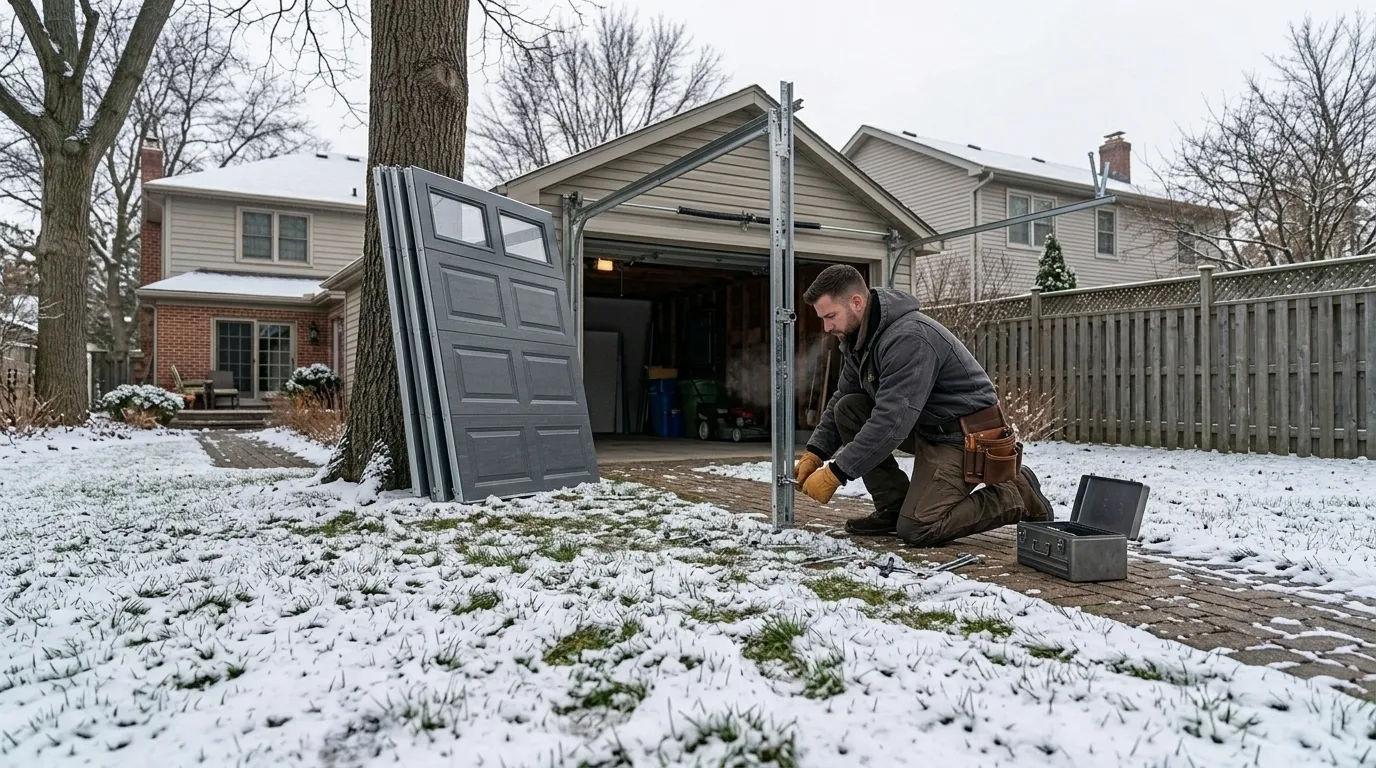
Most of what we install in Stillwater has to fit openings framed between 1966 and 1983, when the bulk of the housing stock here went up. Those framed openings run to a handful of standard widths, and we stock steel sectional doors, torsion springs, and track hardware sized to match them without a custom order. That covers the majority of jobs across the service area.
What we don't keep on the truck is anything oversized or architecturally custom - oval-top carriage doors, non-standard widths, glass panel inserts. Those get special-ordered, and lead time runs longer than a stock swap. If your opening is original to a 1970s build, chances are good we can install off the shelf. If it's been widened or you're going custom, we'll tell you that up front instead of quoting a timeline we can't hit.
We also carry insulated panel options, which matter more here than in a mild climate - more on that below. For hardware, we run torsion spring systems as standard on new installs rather than extension springs, since torsion holds up better over the freeze-thaw cycles the region sees.
Stillwater sits in a cold moderate climate band, and most of the homes needing a garage door replaced right now were built between 1966 and 1983 - a lot of that stock is 1960s-70s construction spread across seven named parts of the service area. Doors from that era were built to a much lower insulation standard than what's sold today, and after four to five decades of freeze-thaw swings, the steel panels warp, the seals crack, and the original springs are long past their rated cycle count.
That combination - older non-insulated doors plus a real winter - is why so many installation calls here aren't emergency repairs, they're owners replacing a door that's simply aged out. A single-layer steel door from the 1970s wasn't built with today's foam-core insulation, so it transmits cold straight into an attached garage, and in a house from that build era, that garage often shares a wall with living space.
We don't see much call for installation driven by storm damage in this area - it's age and thermal cycling doing the work, not one bad event.
We're not going to post a number here that doesn't hold up once we see your actual opening, door style, and whether the old track and springs get reused or replaced. What we can tell you is what drives the cost up or down: door insulation level, whether you're matching an original 1970s-era opening (cheaper, stock sizing) or going custom, and whether the springs and track are being replaced along with the door or just the panel itself.
Median household income across the service area runs around $43,750, and most of our installs reflect that - owners choosing a solid mid-grade insulated steel door over premium options, and reusing sound track and drums when they can rather than replacing the whole system. That's not a discount pitch, it's just what most jobs here actually look like.
Give us your address and door size and we'll give you a real number before we show up, not a range that changes once we're in the driveway.
The most common sign we see on installation calls isn't a door that won't open - it's a door that still works but costs the owner every winter. Cold air pooling along the bottom seal, condensation on the inside panel face, a door that's visibly bowed in the middle from decades of expansion and contraction. On a house built in the 1966-1983 window, that bowing is often the panel itself failing, not just the track.
Owners also call us when the torsion spring finally gives out on a door that was never upgraded from its original hardware - these systems weren't built to run forever, and after this many winters they're due. At that point patching the spring doesn't fix the door underneath it, and we'll tell you plainly when replacement is the better call versus another repair.
We serve homeowners in and around Stillwater, including nearby Glencoe, Perkins, Morrison, and Ripley, each about 11-12 miles out, and can reach Perry, Langston, and Agra as well for installation work.
If the panel itself is warped, cracked, or bowing - common on doors from the 1966-1983 building wave here - repair won't fix the underlying steel. If it's just a spring or opener issue on an otherwise straight door, repair is usually the right call. We'll tell you which one you're looking at before recommending a full install.
Yes. Given the cold moderate climate band here, we install foam-core insulated steel doors as a standard option, not an upsell. Original doors from the 1970s building stock typically weren't insulated at all, so this is one of the bigger differences owners notice after replacement.
We cover Stillwater and the surrounding area, including Glencoe, Perkins, Morrison, and Ripley at roughly 11-12 miles out, plus Perry, Langston, and Agra farther out. Distance affects scheduling, not whether we'll come.
For a stock-size door matching an opening framed in the 1966-1983 era, install is typically a single visit. Custom widths or non-standard panel styles need to be special-ordered first, which adds lead time before we're even on site.
Call now or request a free quote - same-day service on most repairs, upfront written pricing.
