Stillwater, OK · Garage Door Service
Garage door repair and replacement for Perry, OK homes, most built around 1966. Stillwater Garage Door Co travels the 17 miles to match doors to this area's hardware.
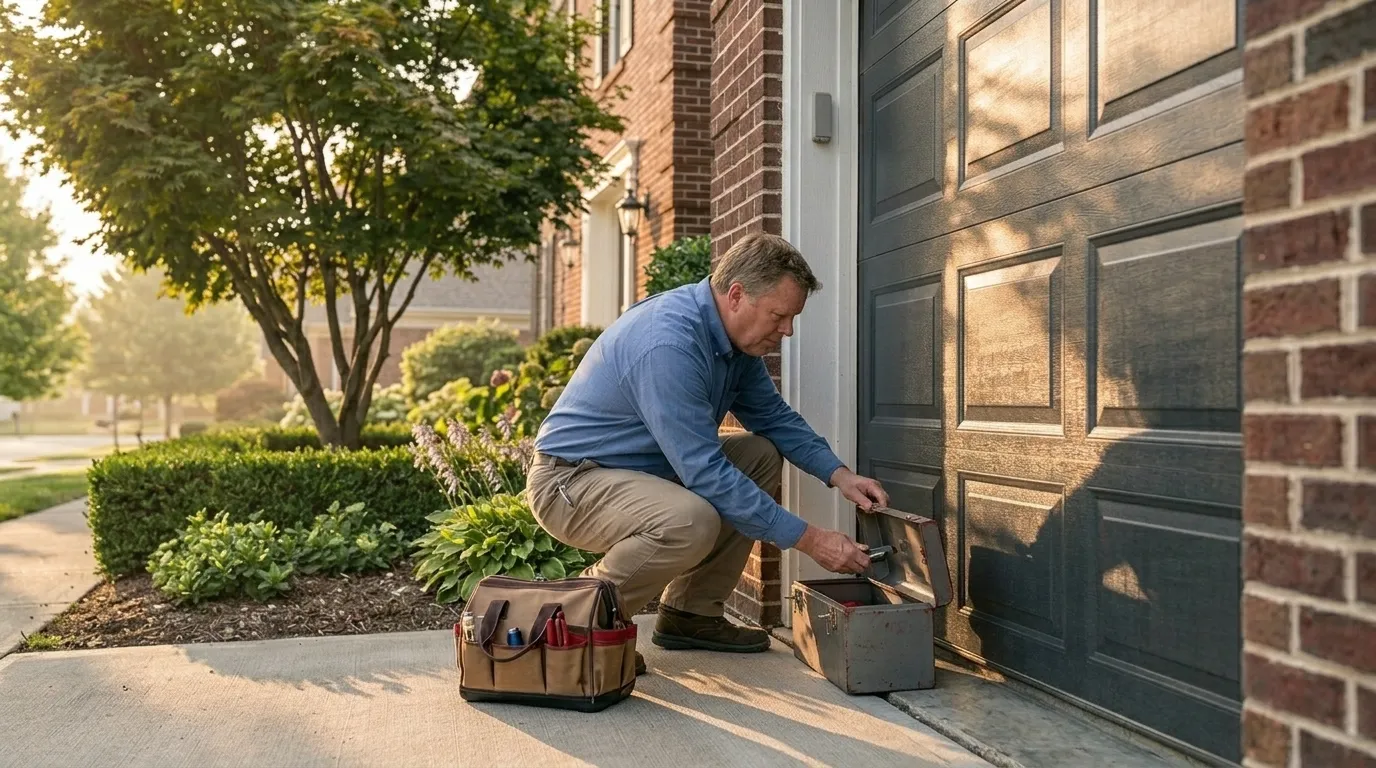
We run out of Stillwater, 17 miles from Perry, and we're straight with people about what that means. We don't promise a same-day slot for every call - if we're mid-job on the other side of the county, you're on the schedule for the next opening, not standing in a driveway waiting on us. We also won't quote a repair over the phone sight-unseen on a door we haven't looked at; torsion spring setups on houses from the mid-1960s vary enough that a guess turns into a second trip and a wasted afternoon for you. If a panel or track is bent past what a straightening job can fix, we'll say so instead of billing you for patchwork that fails again inside a year. And we don't stock every obsolete opener board - if your unit is old enough that the manufacturer discontinued the logic board, we'll tell you plainly that replacement is the honest option, not another repair invoice. None of that is a knock on Perry. It's just what distance and older hardware actually require, and pretending otherwise is how a homeowner ends up paying twice.
We'd rather lose a same-day call than lose your trust on a repeat visit.
We do bring what the job needs once we're on-site - springs, cables, rollers sized for the older track systems common here.
Perry's housing centers on 1966, which puts a lot of doors here a full decade older than what you'd find in a newer subdivision. That matters more than it sounds like it should. Doors from that build year were commonly hung with heavier single-piece sections or early sectional steel, run on tracks sized differently than what's sold off the shelf today, and paired with torsion or extension springs that don't match current standard wind counts. When a spring goes on one of these doors, it's often not a stock part - it's a measured replacement, because the drum size or wire gauge from that era isn't what a big-box store carries.
Openers tell a similar story. A lot of these garages were retrofitted with a chain-drive opener years after the house was built, bolted onto original hardware that was never designed to carry motorized load the same way a newer door is. That combination - old track, older springs, a bolted-on opener - is the exact setup that produces uneven travel, grinding at the top of the run, or a door that reverses for no visible reason. It's not a defect in the house. It's just what forty-plus-year-old garage hardware does under daily use, and it's the pattern we look for first on a Perry call.
Perry has roughly 1,698 households, and the median household income sits around $63,000 - noticeably higher than the wider service area's median of $43,750. That combination tends to show up in garage doors as a mix: some owners have already swapped in an insulated steel door with a modern belt-drive opener, while plenty of others are still running the original hardware that came with a house built around 1966. Neither choice is wrong, but they fail differently. The newer doors mostly have opener sensor or circuit-board issues. The original setups fail at the spring, the cable, or the roller track - mechanical parts that wear out on a schedule, not electronics that just quit.
The wider region this company covers spans towns like Glencoe, Morrison, and Ripley, each about 11 to 12 miles from Stillwater, with Perry sitting a bit farther out at 17. That distance doesn't change what's wrong with a door - a broken spring is a broken spring - but it does mean we plan the drive with the right parts already loaded, based on what a house's build year tells us before we ever knock on the door.
Across the wider area this company serves, housing runs from 1966 to 1983, with 1975 as the rough midpoint - so Perry, centered right at 1966, sits at the older edge of that range rather than the middle. That's a meaningful split. A door built to 1975 specs and a door built to 1966 specs can look similar from the driveway and still need entirely different spring hardware, different track brackets, and in some cases different header clearance for a modern opener bracket.
What this means practically: on a newer-end house in this service area, we're usually dealing with an opener that's aged out or sensors that drifted out of alignment. On a Perry house closer to that 1966 mark, we're more often dealing with springs that were never rated for the door's actual weight, or a track that was shimmed decades ago and never squared up right. Knowing which era a house falls into before we get there changes what we load on the truck, and it's part of why we ask for the rough age of the house when someone calls, not just the symptom.
No. We're based in Stillwater and travel the 17 miles to reach Perry for scheduled and repair calls. We don't claim a local depot or promise a fixed response window because of that distance - we schedule realistically instead.
Perry's housing centers on 1966, older than a lot of the surrounding area. Older doors often use spring sizes and drum configurations that aren't standard stock, so the part costs more and takes more measuring to get right.
That's common on older Perry houses where a modern opener was bolted onto original 1960s-era track and hardware. The opener isn't the problem; the track alignment or roller wear underneath it usually is.
Often yes, if the panels and track are sound - springs, cables, and rollers can be replaced without touching the door itself. If the frame is bent or the panels are rusted through, replacement usually costs less over time than repeated repairs.
Call now or request a free quote - same-day service on most repairs, upfront written pricing.
