Stillwater, OK · Garage Door Service
How Stillwater's cold-moderate winters and 1966-1983 housing stock affect garage door openers during power cuts, plus honest cost factors for repair or replacement.
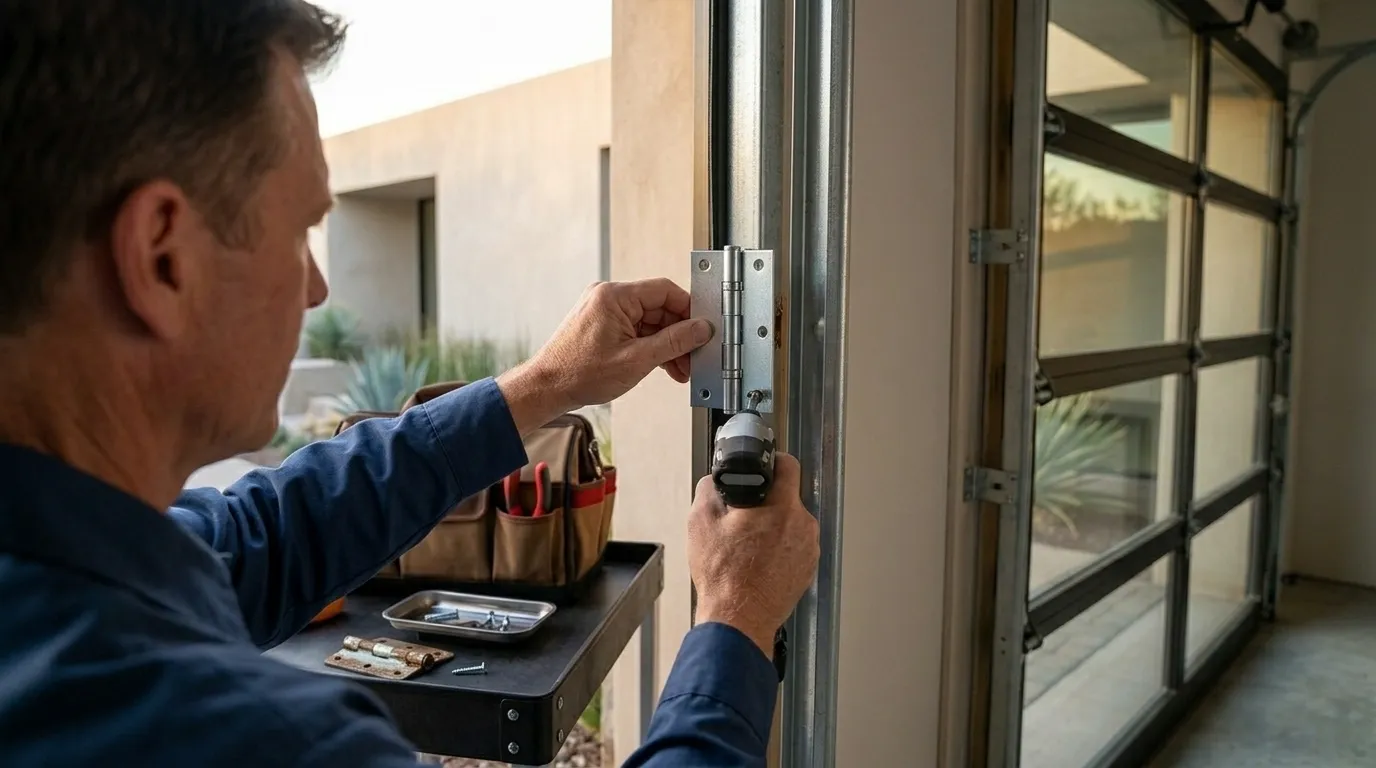
Most of the houses we work on here went up between 1966 and 1983, spread across seven named areas that are still mostly that same 1960s-70s stock. That matters for openers because a lot of those garages still have the original chain-drive units, or a second-generation replacement bolted onto the same bracket points. Those units were never built with a battery backup in mind, and plenty of owners don't find out their opener has no backup until the power goes out and the door won't budge.
The seasonal pattern we see isn't really about heat. It's the cold snaps that show up every winter and stress a 40-to-60-year-old garage structure that was framed for a different set of expectations than today's insulated doors and heavier openers. If your garage was never updated when the door was replaced, the opener bracket and the header above it are doing more work than they were sized for, and that shows up as sag, as a chain that jumps, or as a unit that trips its own breaker on a cold morning start-up.
Stillwater sits in a cold-moderate climate band, which means openers here go through real freeze-thaw cycles every winter rather than a couple of cold weeks. That cycling is hard on the drive components inside an opener - the gears, the sensors, the logic board contacts - especially in units that are original to houses built in the 1966-1983 window and have never been serviced.
When a winter storm knocks out power, a garage door with no battery backup just sits there, dead, until the power comes back or someone pulls the manual release cord. On an older chain-drive opener from that housing era, the release mechanism itself is often stiff or seized from age, which turns a five-second job into a genuine problem at the worst possible moment. We don't sell the idea that every house needs a battery-backup opener. If your garage isn't your only way in or out of the house, and you're not relying on it for a vehicle you need daily, it may not be worth the upgrade. That's a call worth making before a storm, not during one.
We don't have a published price list to hand you here, so we're not going to make up a number that sounds right and isn't. What we can tell you is what drives the cost up or down on a job like this: whether the opener itself needs replacing or just the backup battery and logic board, whether the garage's original 1960s-70s framing needs any reinforcement to carry a heavier modern unit, and whether the manual release and track need attention at the same time so you're not paying for a second visit.
Households in this service area have a median income of $43,750, and we know that number shapes what people are willing to spend on an opener versus keeping the original unit running another few winters. That's a fair call to make. A working 20-year-old chain-drive opener with a fresh release mechanism is often the better answer than a full replacement, and we'll say so on the visit if that's what the door actually needs.
We cover Stillwater and the towns around it - Glencoe, Perkins, and Morrison at about 11 miles out, Ripley just past that at 12, and then Perry, Langston, and Agra further out at 17 to 20 miles. Across that service area there are roughly 3,780 households and just over 2,300 owner-occupied houses, most of them built in that same 1966-1983 stretch, so the opener and power-cut issues we see in one town tend to show up the same way a few miles down the road.
The honest situation is this: if your opener predates battery backup and your garage is your main way in during a storm, that's worth fixing before winter, not after the first outage. If it isn't, a working manual release and a serviced chain drive will carry most houses through another season just fine.
It depends on whether the garage is your main way into the house. Stillwater's cold-moderate winters bring outages tied to ice and wind, and an opener without backup just sits dead until power returns or you use the manual release. If you have another entry, it's often not worth the upgrade cost.
A lot of the openers in this area are original or second-generation units in houses built between 1966 and 1983. Cold-moderate freeze-thaw cycling here is hard on gears, sensors, and logic boards that have been running for decades without service, which shows up most in the coldest weeks.
Every opener has a manual release cord, usually a red handle hanging from the trolley. On older chain-drive units common in this area's housing stock, that release can stiffen with age, so it's worth testing it before winter rather than during your first outage.
We don't have a set price to quote without seeing the unit, but a working chain-drive opener with a serviced release mechanism is often the better call than full replacement, especially given median household incomes in this area. We'll tell you honestly which one the door needs.
Call now or request a free quote - same-day service on most repairs, upfront written pricing.
