Stillwater, OK · Garage Door Service
Perry homes date to around 1966, a few years ahead of the wider service area. Here's what that means for your door, spring, and opener, and how a tune-up visit works.
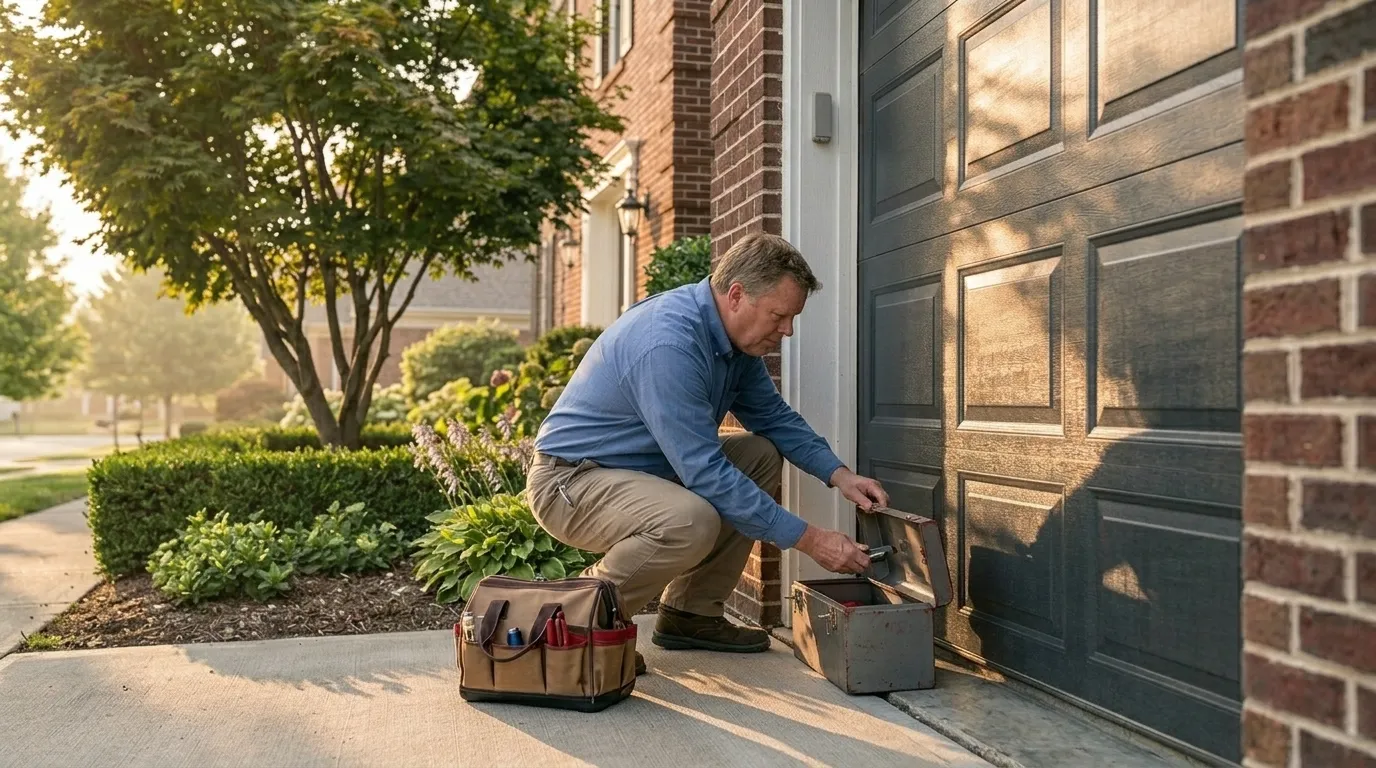
Most garage doors in Perry are original to houses built around 1966, a bit earlier than the 1966-1983 range you see across the wider service area. That means a lot of single-layer steel doors, usually 16x7 for two-car openings, hung on extension springs run along the horizontal track rather than the torsion bar over the header that became standard later. Those extension setups often went in before safety cables were required, so the springs themselves have no containment if one lets go. Add a moderate cold climate and you get stiff nylon rollers, dried-out weatherstrip at the bottom panel, and lift cables that have stretched and re-seated over fifty-some years of freeze and thaw. None of that means the door is failing today. It means the parts doing the work are past the point where routine grease and adjustment hold everything even, and small slack turns into a hard pull or a door that racks in the track. A tune-up on a door this age is less about one bad part and more about catching the whole chain before one link goes.
On a door from this era we start at the springs, since an ungoverned extension spring is the one part that can hurt someone. We check tension, look for a safety cable running through the spring's coil, and add one if it's missing. From there it's rollers, hinges, and track alignment - lubricating what moves, tightening what's backed out, and squaring the track where the header has settled over the decades. We test the opener's force and travel limits if one was added later, since a door this age often had an opener retrofitted onto original hardware that wasn't built for it. We don't replace panels or springs as part of a maintenance visit unless something's already cracked or fraying; that's a separate repair conversation, not a tune-up line item.
We run this out of Stillwater, about 17 miles from Perry, so a maintenance visit here gets scheduled on the route rather than same-day. That's worth knowing up front: we don't keep a truck stationed in Perry, and we're not going to promise a response window we can't back from that distance. What we can do is get a technician out on a set appointment, look at the whole door - not just the symptom you called about - and leave you with a written note on anything worth watching before it turns into a call-out repair. You can see the areas we cover from Stillwater, including Perry, at our area page.
Some of this is fair to do yourself. Wipe down the tracks, check that the bottom weatherstrip still seals against the slab, and put a few drops of lubricant on hinges and rollers a couple times a year, more often given the cold-weather swings this area gets. What you shouldn't touch is the spring. On a door this old, with extension springs that may not have a safety cable, adjusting or replacing one yourself is the single most dangerous DIY job in the house - the spring is under enough tension to cause real injury if it releases. If you're not sure whether your door has that cable installed, that's a five-minute thing for us to check on a visit rather than something to guess at.
A standard maintenance visit doesn't take the door out of service - you can still park and get the car out while we work through the checklist. If we find a cracked spring or a cable close to fraying and you want it handled same visit, that's a separate repair, and we'll tell you before we start whether we have the part on the truck or need to schedule a return trip. Given the age and sizing common to Perry's stock, extension springs for a 16x7 door aren't always something we're carrying for every visit, so a same-day fix on a spring find isn't guaranteed - that's the honest limitation here, and better to say now than promise otherwise.
On a house this age it usually starts small: a door that shudders a few inches before it lifts smoothly, a rumble from one side of the track that wasn't there last winter, or the opener straining longer than it used to before the door clears the floor. Some owners notice the bottom panel isn't sealing flush anymore, letting cold air and leaves in along the slab edge. None of these are emergencies by themselves, but on a door running original 1966-era hardware, they're usually the first sign that something in the spring-and-cable chain has shifted. Perry's households sit at a higher median income than the wider service area, and we see that reflected in owners scheduling a check before something breaks rather than waiting for the call-out. Either way works - we're just as glad to catch it early. For the full slate of what we do out of Stillwater, see our maintenance page for the main service area.
Most homes in Perry were built around 1966, so the original door - if it hasn't been replaced - is a single-layer steel door on extension springs, older hardware than what you'd find on a house built in the 1970s or later elsewhere in the service area.
No. We run out of Stillwater, about 17 miles away, and cover Perry on scheduled visits rather than same-day dispatch. If you need a firm timeline, ask when you book and we'll tell you what the route looks like that week.
Not on a door from this era. Many of these extension-spring setups predate the safety cable requirement, meaning there's nothing to contain the spring if it releases under tension. That's a job for a technician, not a weekend project.
Spring tension and safety cable presence, roller and hinge condition, track alignment, cable wear, and opener force settings if a unit was added later. We flag anything close to failing so you can decide on repair before it becomes a call-out.
Call or request a quote - tell us what your door is doing and where you are.
