Stillwater, OK · Garage Door Service
Perkins homes mostly went up around 1982, later than most of the Stillwater area. We drive out 11 miles to fix the springs, openers, and tracks that come with that stock.
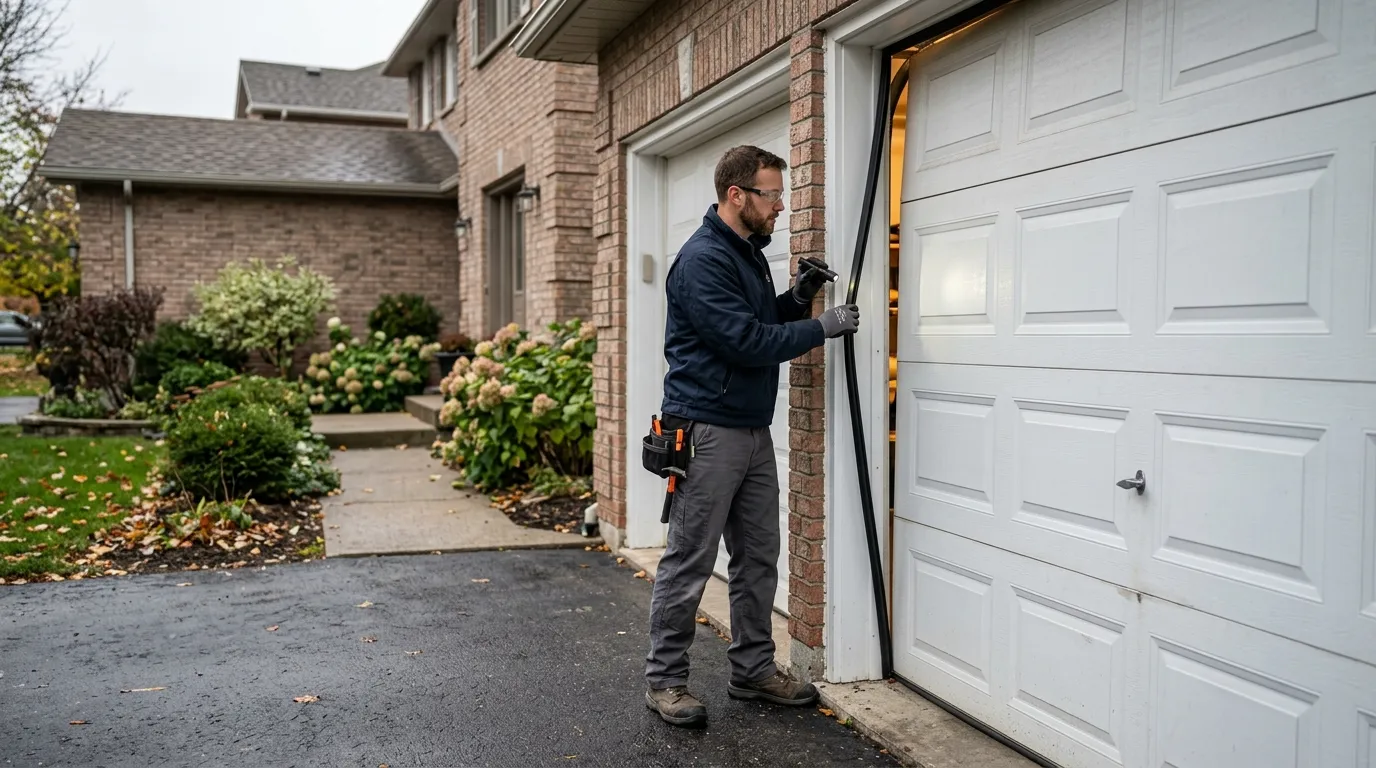
Perkins is a small town by household count - about 1,306 of them - and that matters for how you think about fixing your own door. In a bigger market you'd have three parts stores and a dozen techs to call if a DIY fix goes wrong. Out here, if you snap a cable or drop a panel on your fingers trying to save a service call, the nearest help is still coming from Stillwater, 11 miles off.
That doesn't mean hands-off everything. Lubricating rollers and hinges, tightening loose bolts on the track brackets, and testing the auto-reverse safety feature are all fine to do yourself and worth doing twice a year, especially with the freeze-thaw cycles this area gets. What you shouldn't touch is anything under spring tension - torsion or extension, doesn't matter. A wound torsion spring holds enough force to break bones, and on a lot of Perkins doors that spring has been sitting on the same shaft since the house was built around 1982, which means the steel is old enough that it can let go without much warning. If a spring is broken or the door won't budge, that's a call, not a project.
Because most of Perkins was built close to 1982, the hardware we run into out here skews newer than what we see on the older streets closer to Stillwater, where houses more commonly date to the 1960s and 70s. That means more sectional steel doors on standard torsion springs, and fewer of the older extension-spring setups with exposed cables running along the side rails.
We carry torsion springs sized for the openings common to that era, standard-lift cable, nylon and steel rollers, and photo-eye safety sensors, which is the part that fails most in the cold band this region sits in - condensation and ice on the lenses throw false readings before anything else on the door quits. We stock openers and drive components too, though if your unit is an older chain-drive from the original build, we may need to order a compatible logic board rather than have it on the truck, since that part isn't something every job calls for.
The typical failure point on a Perkins door isn't the spring itself - it's what the spring is attached to. Houses from around 1982 usually have galvanized torsion hardware that's held up fine, but the end bearing plates and the center bearing can seize from disuse if a door doesn't get opened much, which happens on garages that mostly store things rather than park a car.
We also see openers original to the house limping along on worn drive gears. They still lift the door, slowly, with a grinding sound owners have learned to ignore, until the gear finally strips and the door won't move at all. That's a straightforward opener repair, not a full replacement, in most cases - worth saying because plenty of shops will quote a new unit before checking the gear.
It rarely starts as a dead door. More often it's the opener struggling on the last foot of travel, a door that reverses partway up for no clear reason, or a spring that visibly sags with a gap between coils instead of sitting tight. Cold mornings make all of it worse - metal contracts, grease thickens, and a door that worked fine yesterday afternoon binds up at 20 degrees.
A loud bang from the garage, usually mistaken for something falling, is almost always a spring letting go. If that happens, don't try to lift the door manually with the opener engaged. Disconnect the release and leave it until we get out there.
We run out to Perkins from Stillwater, 11 miles away, so a call gets scheduled rather than answered same-hour the way it might be for a job inside town. Tell us what the door is doing - won't open, won't close, opener runs but nothing moves, loud noise - and we'll bring the parts that match, based on what's common for a door of this age.
For a broken spring, we measure the wire size and wind, match it to the door weight, and replace both springs on a double door even if only one broke - mismatched springs wear unevenly and you'll be back to square one within a year. For opener issues, we check the drive gear, the logic board, and the safety sensors before assuming the whole unit needs to go.
One thing we're upfront about: if your opener predates common part numbers or uses a chain-drive design nobody stocks logic boards for anymore, a straight repair might cost close to what a new opener runs. In that case we'll say so rather than sink parts into a unit that's going to fail again next year.
About 11 miles from Stillwater. We schedule Perkins calls rather than treat them as drive-by stops, so tell us what the door is doing when you call and we'll bring parts sized for it.
This area sits in a cold, moderate climate band, and metal track and hardware contract in low temperatures while grease thickens. A door that runs fine in summer can bind or reverse on its own in freezing mornings - lubrication helps but won't fix a spring that's already weak.
Depends on the model. Most Perkins homes date to around 1982, so openers original to the house are getting old enough that some parts, like specific logic boards, aren't stocked anymore. We'll check before recommending replacement over repair.
Call or request a quote - tell us what your door is doing and where you are.
